

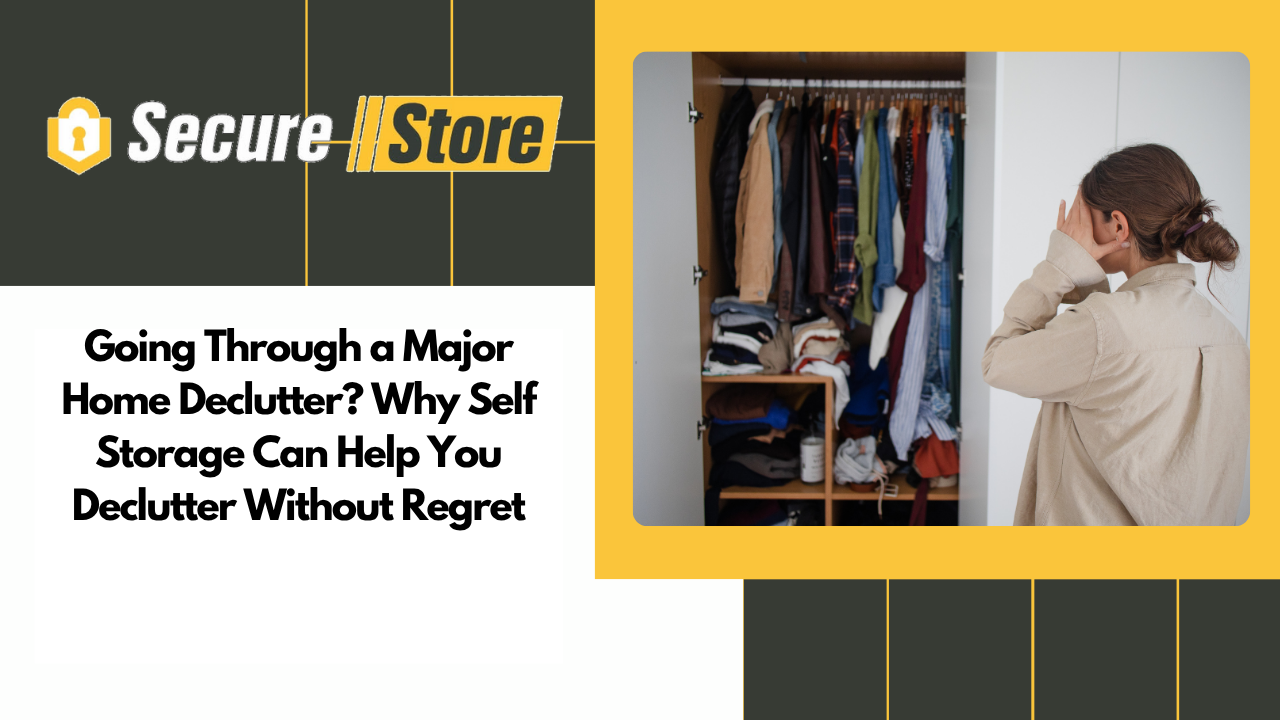
Decluttering sounds simple until you actually start.
You open one cupboard intending to clear a few things and suddenly you’re surrounded by old photographs, children’s belongings, furniture you might use again, boxes from previous house moves and possessions you haven’t seen for years.
Some things are easy to throw away.
Others aren’t.
And that is where many decluttering projects come to a halt.
You don’t necessarily need to choose between keeping everything at home and getting rid of it permanently. Self storage can provide a useful middle ground, allowing you to reclaim your living space while giving yourself more time to decide what you genuinely want to keep.
At SecureStore, we provide flexible self storage and Removal + Storage across Bury, Manchester, Failsworth and Salford, helping households create more usable space without making rushed decisions.
Why Is Decluttering So Difficult?
The problem often isn’t the physical act of clearing a room. It’s deciding what happens to everything inside it.
A typical home can contain years of accumulated possessions:
- Furniture
- Children’s toys
- Clothes
- Books
- Photographs
- Kitchen equipment
- Sports gear
- Christmas decorations
- Hobby equipment
- Family keepsakes
- Boxes from previous moves
Many of these belongings aren’t rubbish.
You simply don’t need them every day.
That distinction matters.
The Three Questions to Ask Before Keeping Something
When you’re decluttering, ask yourself:
Do I use it?
If you regularly use something, it probably deserves space in your home.
Do I genuinely value it?
Some belongings aren’t regularly used but have sentimental or financial value.
Am I realistically going to need it again?
This is particularly relevant for seasonal items, children’s equipment and good-quality furniture.
If the answer to all three questions is no, it may be time to let the item go.
If you’re uncertain, temporary storage gives you another option.
Try the Four-Category Decluttering Method
Rather than moving belongings from one room to another, divide everything into four clear categories.
1. Keep at Home
These are possessions you regularly use and want readily available.
2. Put Into Storage
These are belongings you want to retain but don’t need occupying everyday living space.
3. Sell or Donate
These are usable possessions you know you no longer want.
4. Recycle or Dispose
These are items that are damaged, broken or no longer useful.
The important thing is not creating a fifth category called “I’ll leave it here and decide later.”
That’s how clutter comes back.
What Should You Consider Putting Into Storage?
Storage works particularly well for belongings that are useful, valuable or sentimental but aren’t required regularly.
Examples include:
- Seasonal decorations
- Suitcases
- Camping equipment
- Spare furniture
- Children’s keepsakes
- Collectables
- Sports equipment
- Family photographs
- Occasional-use kitchen equipment
- Hobby supplies
- Seasonal clothing
Removing these belongings can create a surprising amount of additional room.
Declutter One Room at a Time
Trying to clear an entire house in one weekend can quickly become overwhelming.
Instead, work systematically.
You might start with:
- Spare bedroom
- Garage
- Loft
- Hallway cupboards
- Living room
- Bedrooms
- Kitchen
- Garden shed
Finish one area before moving onto the next.
Seeing a completed clutter-free room can also provide motivation to continue.
Start With the Spare Bedroom
The spare bedroom is often a good place to begin because it frequently becomes unofficial household storage.
You may discover:
- Suitcases
- Boxes
- Old furniture
- Clothes
- Exercise equipment
- Christmas decorations
- Children’s belongings
Clear these out and suddenly you have a usable room again.
It could become a guest bedroom, home office, nursery or hobby room rather than an expensive cupboard.
Reclaim Your Garage
Garages are another common clutter hotspot.
Many households have garages so full of possessions that there isn’t enough room to park a car.
Bikes, tools, garden furniture, camping equipment and old household items gradually fill every available corner.
Moving rarely used belongings into storage could allow you to use the garage for its intended purpose again.
Seasonal Rotation Can Keep Your Home Organised
Not everything needs to live at home all year.
During summer, you might store:
- Winter sports equipment
- Heavy winter clothing
- Christmas decorations
During winter, you could swap these for:
- Camping equipment
- Garden furniture
- Outdoor toys
- Summer sports equipment
This approach effectively allows your storage space to change with the seasons.
Retailers such as IKEA UK and Dunelm offer plenty of useful home organisation products, but even the best shelving system cannot create unlimited space.
Sometimes the answer is simply having fewer things inside the house.
Don’t Confuse Organisation With Decluttering
Buying more storage boxes isn’t necessarily decluttering.
If you take 100 items, put them into attractive containers and return them to the same room, you still own 100 items occupying roughly the same amount of space.
Organisation is useful.
But genuine decluttering means deciding what deserves to remain in your everyday living environment.
Self storage can help by separating possessions you want to keep from possessions you actually need at home.
Selling Unwanted Belongings
A serious declutter can also generate some extra money.
Suitable items can potentially be sold through platforms such as eBay UK, Vinted UK and Facebook Marketplace.
But don’t allow selling to delay your entire project.
If you’re waiting weeks for buyers while unwanted furniture remains in every room, you haven’t actually reclaimed the space.
Set yourself a reasonable deadline.
If something doesn’t sell, decide whether to reduce the price, donate it or take another appropriate route.
Donate Good-Quality Items
Not everything needs to be sold.
Good-quality furniture, clothing and household items may be useful to charitable organisations, depending on what they currently accept.
British Heart Foundation furniture donations provides information about donating suitable items and potential collection arrangements.
Always check an organisation’s current requirements before taking or arranging collection of larger items.
Sentimental Belongings Need a Different Approach
Photographs, children’s artwork, inherited furniture and family keepsakes aren’t the same as an old toaster.
You may genuinely want to keep them even though you rarely use them.
Don’t force yourself into unnecessary decisions simply because you’re decluttering.
Instead, create a clearly defined sentimental category.
Suitable belongings can be carefully packed, labelled and placed into storage, allowing you to retain them without having boxes occupying your everyday living space.
The “Maybe” Box
If you’re really struggling to decide, try creating a temporary “maybe” box.
Put uncertain non-essential belongings inside and record what you’ve stored.
After several months, review them.
If you haven’t needed or thought about most of the contents, making the final decision may be much easier.
For valuable or sentimental possessions, however, frequency of use doesn’t necessarily determine whether they’re worth keeping.
Decluttering Before Moving House
A house move is one of the best opportunities to declutter.
There’s little point paying to move belongings from one property to another if you already know you don’t want them.
Temporary storage can also help prepare your property for sale by removing excess furniture and boxes before estate-agent photographs and viewings.
Major property platforms such as Rightmove and Zoopla mean buyers often see your home online before visiting it.
A cleaner, less crowded property can make it easier for viewers to understand the available space.
Decluttering After Moving House
The opposite approach can work too.
Perhaps you’ve already moved and discovered that your new property has less storage than expected.
Instead of immediately filling every cupboard, garage and spare room, move non-essential belongings into storage.
Live in the property for a while.
You’ll soon discover what you actually use.
Removal + Storage Can Help With Bigger Declutters
If you’re dealing with large furniture or the contents of several rooms, moving everything yourself can become a significant job.
SecureStore’s Removal + Storage service can make the process easier.
Speak to us about the furniture and belongings you need moving, and we can discuss the options available for transporting suitable items into storage.
This can be particularly helpful when clearing:
- Garages
- Spare rooms
- Multiple bedrooms
- Large furniture
- Properties before moving
Don’t Pay to Store Things You Definitely Don’t Want
Self storage should help you create space, not become somewhere to avoid decisions forever.
Before storing something, ask whether there is a genuine reason to retain it.
Good reasons might include:
- Sentimental importance
- Seasonal use
- Future furniture requirements
- Financial value
- Hobby use
- Family use
- Temporary lack of space
If something is broken, unwanted and unlikely to be used again, storing it may not make sense.
How to Keep Your Storage Unit Organised
If you’re using storage as part of a major decluttering project, organisation matters.
Label every box clearly.
For example:
CHRISTMAS DECORATIONS
FAMILY PHOTOGRAPHS
WINTER CLOTHING
CAMPING EQUIPMENT
CHILDREN’S KEEPSAKES
Keep an inventory on your phone and place items you expect to access more frequently nearer the accessible part of the unit.
How to Book Your Storage Unit
Getting started with SecureStore is straightforward:
- Choose one area of your home to declutter.
- Separate belongings into keep, store, sell/donate and dispose categories.
- Contact SecureStore with an idea of what you need to store.
- Choose an appropriate storage unit.
- Ask us about Removal + Storage if you need help moving larger belongings.
- Keep your storage unit organised so belongings remain easy to find.
Call: 0161 470 0288
Email: info@securestoreselfstorage.co.uk
Visit: 574 Manchester Road, Bury
No deposit required in many cases; same-day move-in may be available.
Ready to Reclaim Your Home?
Decluttering doesn’t have to mean getting rid of possessions you’ll later regret losing.
Sometimes you simply need to separate the belongings you want to own from the belongings you need around you every day.
SecureStore provides flexible self storage and Removal + Storage across Bury, Manchester, Failsworth and Salford, helping you create a cleaner, more usable home without making rushed decisions.
Call 0161 470 0288, email info@securestoreselfstorage.co.uk, or visit 574 Manchester Road, Bury to discuss your storage requirements.
Frequently Asked Questions
Is using self storage really decluttering?
It can be, provided you’re intentional about what you store. The aim isn’t to move unwanted rubbish elsewhere; it’s to remove suitable belongings you genuinely want to retain but don’t need occupying everyday living space.
What should I avoid putting into storage?
Storage facilities have restrictions on certain items. Speak to SecureStore before moving anything you’re unsure about into your unit.
Can SecureStore help move larger furniture?
Yes. We provide Removal + Storage. Contact our team with details of what needs moving so we can discuss your requirements.
How do I know what size unit I need?
Tell us what you’re planning to store and our team can help you identify a suitable storage option.
Should I store things I’m unsure about?
For genuinely valuable, useful or sentimental possessions, temporary storage can give you time to decide. However, there is little benefit in paying to store belongings you already know you don’t want.