
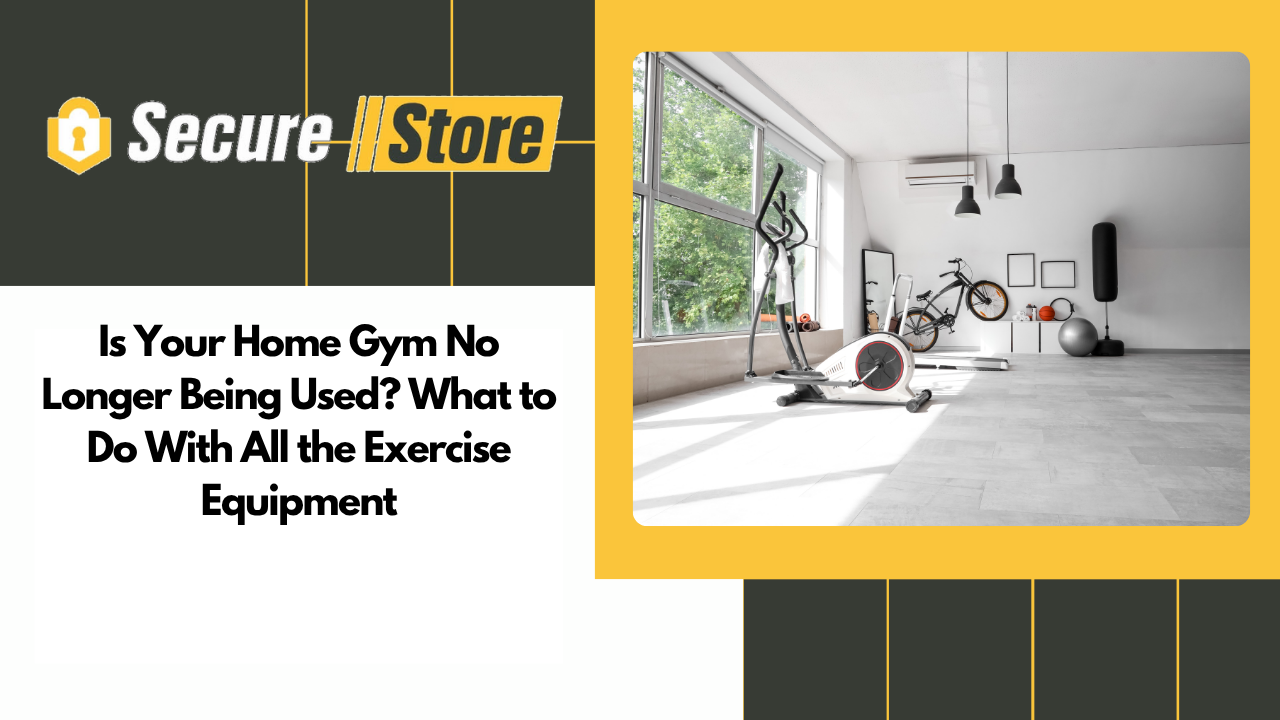
Setting up a home gym can seem like a brilliant idea.
You buy some weights.
Then a bench.
Perhaps a treadmill or exercise bike.
A rack appears.
Then kettlebells, resistance equipment, mats and accessories.
For a while, everything gets used.
But circumstances change.
You might join a gym.
Return to playing sport.
Need the room for something else.
Move your workouts outdoors.
Or simply discover that the large exercise machine in the spare room has become an extremely expensive clothes horse.
The problem is that home gym equipment is often heavy, bulky and expensive to replace.
You may not want to sell everything just because you’re taking a break from training at home.
At the same time, leaving unused equipment occupying an entire room can feel like a waste of valuable space.
For suitable equipment, self storage can provide a useful middle ground.
SecureStore provides flexible personal self storage and Removal + Storage across Bury, Manchester, Failsworth and Salford, helping households keep suitable belongings without allowing them to dominate the home.
2-Week Flash Offer: First Month’s Storage for Just £1
If your home gym isn’t getting the use it once did, SecureStore’s current flash offer could make this a useful time to reorganise.
For two weeks only, get your first month of storage for just £1.
Suitable exercise equipment that you want to keep but don’t currently need could potentially be moved into storage while you decide what happens next.
2-WEEK FLASH OFFER
FIRST MONTH’S STORAGE: £1
Promotional terms, eligibility and availability apply.
Call 0161 470 0288 or email info@securestoreselfstorage.co.uk to discuss your requirements.
Why Home Gym Equipment Creates Such a Space Problem
Exercise equipment isn’t like a box of clothes.
A treadmill can occupy a substantial section of a room.
A weight bench needs floor space.
A rack may dominate an entire wall.
Then there are all the smaller pieces:
- Dumbbells
- Weight plates
- Kettlebells
- Barbells
- Mats
- Resistance bands
- Steps
- Medicine balls
- Foam rollers
- Boxing equipment
- Accessories
Individually, many of these seem manageable.
Together, they can take over a bedroom, garage or conservatory.
Start by Asking Why the Gym Isn’t Being Used
Before moving everything, understand what’s actually changed.
Perhaps you:
- Joined a commercial gym
- Started attending fitness classes
- Changed training style
- Began running or cycling instead
- Need the room for another purpose
- Are temporarily unable to train at home
- Simply aren’t enjoying home workouts anymore
The reason matters because it can help determine whether the equipment should be stored, sold or kept accessible.
Separate Temporary From Permanent Decisions
If you’ve definitely finished with home training, storing everything indefinitely may not make sense.
Selling suitable equipment could be the better option.
But if you’re unsure, temporary storage can give you time.
You might want to keep your equipment because:
- Your gym membership is temporary
- You’re expecting to move to a larger property
- You’re planning a future garage gym
- You’re taking a temporary break
- The equipment was expensive
- You may return to home training later
You don’t necessarily need to make a permanent decision immediately.
Make Four Equipment Categories
Go through everything and create four groups.
Keep at Home
Equipment you still use regularly.
Store
Suitable equipment you expect to use again but don’t currently need.
Sell or Donate
Good-quality equipment you’re unlikely to use again.
Dispose or Recycle Appropriately
Broken, unsafe or unusable equipment.
This prevents you paying to store equipment you don’t actually want.
Don’t Store Equipment Because You Feel Guilty About Buying It
This is particularly common with exercise equipment.
You spent £800 on a machine.
You barely used it.
Selling it feels like admitting defeat.
So it sits in the spare room for five years.
The original purchase price has already been spent.
The better question is:
Do I realistically expect to use this again?
If the answer is no, consider selling it.
Keep the Equipment You Actually Enjoy
You may discover that the large exercise machine isn’t being used, but your dumbbells are.
That’s useful information.
Your future home workout setup doesn’t need to look like a commercial gym.
Perhaps all you genuinely need is:
- Adjustable dumbbells
- Mat
- Bench
- Resistance bands
Keeping your favourite equipment and removing everything else could give you the best of both worlds.
Treadmills Are a Major Commitment
A treadmill can be one of the largest pieces of equipment in a home gym.
Before moving or storing one, check:
- Manufacturer instructions
- Weight
- Dimensions
- Whether it folds
- Whether components can safely be removed
- Recommended moving procedure
- Storage requirements
Do not start dismantling a machine without checking the manufacturer’s guidance.
Exercise Bikes Can Still Be Awkward
Exercise bikes generally occupy less room than treadmills, but they’re still substantial household items.
If yours isn’t being used, ask whether it genuinely needs permanent floor space.
Before moving it, follow manufacturer instructions and consider its weight and dimensions.
Rowing Machines Can Be Surprisingly Long
Some rowing machines fold or separate.
Others don’t.
Check the specific manufacturer’s guidance.
If an item is designed to fold for storage, use the intended mechanism rather than improvising.
Weight Benches May Fold
Depending on the design, a bench may fold or adjust into a more compact position.
Again, follow manufacturer guidance.
Don’t remove structural components simply to save space unless the equipment is designed to be dismantled in that way.
Free Weights Need Careful Handling
Dumbbells, kettlebells and weight plates don’t necessarily occupy huge amounts of space.
But they’re extremely dense.
A small box of weight plates can become far too heavy to lift safely.
Do not put large quantities of weights into ordinary cardboard boxes.
Use appropriate handling methods and don’t attempt to lift loads beyond your capabilities.
Never Overload Shelving
If you’re storing heavy weights, don’t assume any shelf can support them.
Check load limits.
Weight plates and dumbbells can create enormous concentrated loads.
Where appropriate, keep heavy equipment low and stable rather than placing it at height.
Think About the Storage Unit Floor Too
Heavy equipment needs sensible distribution.
Don’t create unstable piles of weights or equipment.
Speak to SecureStore about particularly heavy items so the team understands what you intend to store.
Barbells Need Length
A standard barbell is long.
Even though it’s narrow, it needs appropriate space.
Measure it before choosing your storage arrangement.
Keep bars positioned safely so they cannot fall or become a trip hazard.
Keep Weight Plates Organised
If you own multiple plates, organise them by size.
For example:
20 kg
10 kg
5 kg
2.5 kg
Keeping equipment organised makes future setup considerably easier.
Photograph Your Gym Before Dismantling It
If you have a more complicated setup, photograph everything first.
Take pictures of:
- Rack assembly
- Bench setup
- Cable positions
- Attachments
- Equipment layout
If you later rebuild the gym, you’ll have a useful reference.
Keep Fixings With the Equipment
If suitable equipment is designed to be dismantled, label all components.
Put appropriate screws, bolts and fittings into clearly labelled bags.
For example:
BENCH – FIXINGS
RACK – BOLTS
BIKE – REMOVED COMPONENTS
Do not create one bag called:
GYM SCREWS
Keep Instruction Manuals
If you still have the original manual, keep it with the equipment.
If not, check the manufacturer’s website before dismantling anything.
Save a digital copy if available.
Clean Equipment Before Storage
Exercise equipment can accumulate:
- Sweat
- Dust
- Chalk
- General dirt
Follow the manufacturer’s cleaning instructions before longer-term storage.
Avoid applying unsuitable household cleaning chemicals to specialist equipment.
Make sure appropriate items are properly dry before packing them away.
Don’t Forget Exercise Mats
Mats can become dirty through regular use.
Clean them according to the manufacturer’s instructions and allow them to dry fully before rolling or storing.
Don’t trap moisture inside rolled equipment.
Resistance Bands Don’t Last Forever
Elastic and resistance products can deteriorate.
Before keeping them, inspect them according to manufacturer guidance.
If a band shows signs of damage or deterioration, don’t assume it is safe simply because it has been stored.
Check equipment again before future use.
Boxing Equipment Can Be Bulky Too
Punch bags, gloves, pads and stands can occupy significant space.
A freestanding punch bag in particular can dominate a room.
Before moving or dismantling one, check manufacturer guidance.
Some bases may contain water or other filling materials that require appropriate handling before transport.
Don’t Put Liquids Into Storage Without Checking
If fitness equipment contains water, fluid, fuel or another substance, speak to SecureStore before moving it.
Certain liquids, chemicals and hazardous materials may be prohibited.
Never assume that because something is part of a piece of equipment it is automatically acceptable.
Home Gyms Often Take Over Garages
The garage became a gym.
Then the gym stopped being used.
But the car still can’t go into the garage.
This is a common problem.
If you want to reclaim your garage for:
- Parking
- Tools
- Bikes
- DIY
- General household use
moving suitable unused exercise equipment into storage could restore the space without forcing you to sell everything immediately.
Reclaim a Bedroom
Home gyms also appear in spare bedrooms.
If your circumstances change, you may need that room back.
Perhaps you need:
- Guest accommodation
- Study space
- Children’s bedroom
- General living space
Unused gym equipment shouldn’t necessarily dictate how a whole room is used.
Don’t Just Move Everything Into Another Room
Moving the treadmill from the spare bedroom into the dining room hasn’t solved the problem.
You’ve simply relocated it.
If equipment genuinely isn’t needed for several months, consider whether it should remain inside the home at all.
Expensive Equipment Can Be Worth Keeping
High-quality fitness equipment can be costly to replace.
If you genuinely expect to build another home gym, selling everything now and buying it again later could prove expensive.
Temporary storage can bridge the gap.
The key word is genuinely.
Don’t use hypothetical future plans as an excuse to keep equipment indefinitely.
Keep an Inventory
If you’re storing multiple pieces, create a simple list.
For example:
1 x adjustable bench
2 x dumbbells
1 x Olympic bar
Weight plates – complete set
1 x exercise bike
Accessories – Box 1
Add photographs where useful.
Record Model and Serial Numbers
For more expensive machines, record:
- Manufacturer
- Model
- Serial number
- Approximate purchase date
Keep receipts and relevant documentation if you still have them.
This can be useful for insurance and future resale.
Check Insurance Arrangements
If you’re storing valuable fitness equipment, understand the applicable insurance arrangements.
SecureStore offers storage insurance options.
Speak to the team about the equipment you intend to store, its value and the available cover.
Don’t assume your household insurance automatically covers everything stored away from your property.
Sell Equipment While There Is Still Demand
If you’ve decided you’re finished with a piece of equipment, don’t leave it gathering dust indefinitely.
Good-quality used fitness equipment may have a resale market.
Options can include:
eBay UK
ebay.co.uk
Facebook Marketplace
facebook.com/marketplace
Describe condition accurately and follow the platform’s current selling rules.
Be Careful Selling Very Heavy Equipment
A buyer may need to collect large machines.
Plan access carefully.
Don’t allow unsafe lifting or dismantling.
Make clear what collection involves before agreeing a sale.
Donate Suitable Equipment
Some charities or community organisations may accept certain fitness equipment, although policies vary.
Contact organisations directly before transporting anything.
Do not assume every charity shop can accept a treadmill or large weight bench.
Broken Electrical Fitness Equipment Needs Proper Disposal
A broken treadmill isn’t ordinary household rubbish.
Electrical and electronic equipment may require appropriate recycling.
Check your local council’s arrangements:
GOV.UK – Find Your Local Council
gov.uk/find-local-council
For information about electrical recycling, you can also visit:
Recycle Your Electricals
recycleyourelectricals.org.uk
Don’t Store Unsafe Equipment for Future Use
If equipment is damaged, storing it doesn’t repair it.
Before deciding to keep something, inspect it according to manufacturer guidance.
If safety-critical components are damaged, obtain appropriate repair advice.
Check Everything Again Before Reuse
Equipment that has been stored for an extended period should be checked before returning to use.
Follow the manufacturer’s inspection, assembly and maintenance instructions.
This is especially important for equipment where failure could cause injury.
You May Discover You Prefer a Smaller Home Gym
Putting equipment into storage can reveal what you actually miss.
Perhaps after three months you realise you only want:
- Bench
- Dumbbells
- Mat
That can help you design a much more practical future setup.
Rotate Equipment if Your Training Changes
You may train differently at different times of year.
For example, you might spend more time exercising outdoors during warmer months and return to indoor training during winter.
Suitable storage could allow some equipment to be rotated rather than permanently occupying your home.
Don’t Let Storage Become the New Excuse
Storage should help you make better use of your space.
It shouldn’t become somewhere to avoid decisions forever.
Review your stored gym equipment periodically.
Ask:
Have I used this?
Will I realistically use it again?
Would I rather sell it?
If something remains untouched year after year, it may be time to let it go.
Removal + Storage Can Make Heavy Gym Equipment Easier
Fitness equipment can be exceptionally difficult to move.
Treadmills, benches, racks and weights may require more than one person and appropriate handling.
SecureStore provides Removal + Storage for suitable belongings.
Speak to our team about exactly what you need moving so appropriate arrangements can be discussed.
Do not attempt unsafe lifting.
Use SecureStore’s £1 First-Month Flash Offer
If your unused home gym is occupying valuable space, our current promotion could make this a useful time to reorganise.
For two weeks only:
GET YOUR FIRST MONTH OF STORAGE FOR JUST £1
Subject to SecureStore’s terms and suitability, storage could potentially help with:
- Exercise bikes
- Suitable treadmills
- Weight benches
- Dumbbells
- Kettlebells
- Weight plates
- Barbells
- Exercise mats
- Boxing equipment
- Other suitable fitness equipment
Speak to SecureStore about particularly large, heavy or electrical equipment before moving it.
2-WEEK FLASH OFFER – FIRST MONTH’S STORAGE £1
Promotional terms, eligibility and availability apply.
How to Book Your Unit With SecureStore
Getting organised is straightforward:
- Review all your home gym equipment.
- Keep regularly used equipment accessible.
- Identify suitable equipment you genuinely expect to use again.
- Sell, donate or appropriately recycle equipment you no longer want.
- Check manufacturer instructions before dismantling anything.
- Clean suitable equipment before storage.
- Photograph complicated setups and label components.
- Contact SecureStore and ask about our 2-week flash offer – first month’s storage for £1.
- Choose a suitable storage unit.
- Ask about Removal + Storage for heavy or bulky equipment.
2-WEEK FLASH OFFER: FIRST MONTH’S STORAGE FOR £1
Call: 0161 470 0288
Email: info@securestoreselfstorage.co.uk
Visit: 574 Manchester Road, Bury
Locations: Bury | Manchester | Failsworth | Salford
No deposit required in many cases; same-day move-in may be available.
Contact SecureStore for promotional terms, eligibility and current unit availability.
Your Home Doesn’t Need to Remain a Gym Forever
A home gym can be incredibly convenient when you’re using it.
When you’re not, it can become one of the biggest consumers of space in the house.
You don’t necessarily need to choose between keeping everything exactly where it is and selling everything immediately.
Keep the equipment you actively use.
Sell what you’re finished with.
Store suitable equipment you genuinely expect to need again.
Then use the reclaimed room or garage for whatever your household needs today.
SecureStore provides flexible personal self storage and Removal + Storage across Bury, Manchester, Failsworth and Salford.
And for a limited period, your first month of storage is just £1 with our 2-week flash offer.
Call 0161 470 0288 or email info@securestoreselfstorage.co.uk to discuss your storage requirements.
Frequently Asked Questions
Can exercise equipment be kept in self storage?
Suitable permitted exercise equipment may be stored subject to SecureStore’s terms and the manufacturer’s storage requirements. Speak to the team about particularly large, heavy or electrical items.
Can I store weights and dumbbells?
Suitable weights may be stored, but their concentrated weight needs careful handling and organisation. Don’t overload boxes or shelving, and discuss unusually heavy quantities with SecureStore.
Can a treadmill go into self storage?
Potentially, depending on the machine, its size and storage requirements. Check the manufacturer’s instructions and speak to SecureStore before arranging transport.
Can SecureStore help move heavy gym equipment?
Yes. SecureStore provides Removal + Storage for suitable belongings. Speak to our team about the equipment and its approximate size and weight.
Should I dismantle gym equipment before storing it?
Only if the equipment is designed to be dismantled and you follow the manufacturer’s instructions. Keep components and fixings clearly labelled.
What is SecureStore’s current flash offer?
For a limited two-week period, your first month of storage is £1, subject to promotional terms, eligibility and availability.