

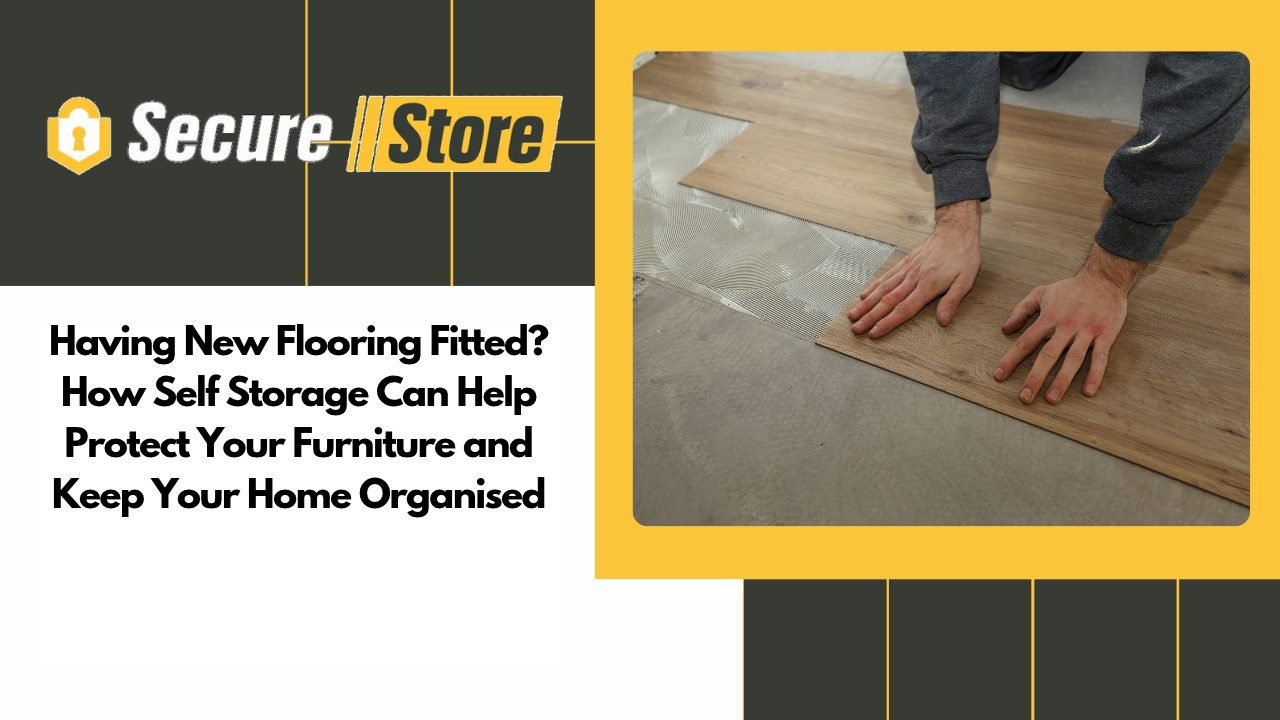
New flooring can completely change the appearance of your home.
Whether you’re replacing worn carpets, installing laminate flooring, choosing luxury vinyl tiles or investing in wooden floors, the finished result can make a room feel brighter, cleaner and more modern.
But before your new flooring is installed, there’s one important question to consider.
Where are you going to put all your furniture?
Flooring installations often require rooms to be cleared before work begins. Sofas, dining tables, wardrobes, beds and other household belongings may need to be moved temporarily.
For homeowners replacing flooring across several rooms, this can quickly become a major logistical challenge.
Your living room furniture ends up in the dining room. Bedroom furniture fills the hallway. Boxes of household belongings take over the spare room.
And suddenly, a relatively straightforward home improvement project feels much more complicated.
Self storage can provide additional space for suitable furniture and household belongings while your flooring is being replaced.
SecureStore offers flexible personal self storage across Bury, Manchester, Failsworth, Salford and the wider Greater Manchester area.
Why Flooring Installations Require So Much Preparation
Unlike decorating a room, where some furniture can occasionally remain in place, flooring work often requires access to the entire floor surface.
Depending on the installation, contractors may need to:
- Remove existing carpets or flooring
- Lift underlay
- Prepare the subfloor
- Repair uneven surfaces
- Install moisture barriers where appropriate
- Lay new flooring
- Fit thresholds and edging
- Reinstall skirting or trims
- Allow materials to settle or cure
Furniture can obstruct these activities.
Even smaller items may need to be removed to allow installers to work efficiently.
Speak to Your Flooring Installer Before Moving Anything
Before clearing your rooms, ask your installer exactly what preparation is required.
Useful questions include:
- Does the room need to be completely empty?
- Will the installers move any furniture?
- Do wardrobes need to be dismantled?
- Should existing flooring be removed beforehand?
- How long will each room be unavailable?
- Are there drying or curing times?
- When can heavy furniture be returned?
Different flooring materials have different installation requirements.
Always follow your contractor’s instructions.
Replacing Flooring in One Room Versus the Whole House
The amount of disruption depends on the scale of the project.
One-room flooring replacement
If you’re replacing the carpet in a single bedroom, you may be able to move suitable furniture into another room temporarily.
Several rooms
If you’re replacing flooring throughout the ground floor, finding enough space for furniture becomes more difficult.
Whole-house flooring replacement
A full flooring renovation can require substantial planning, particularly when bedrooms, hallways and living areas are all affected.
In these situations, temporary storage can help keep suitable belongings out of the way until work is complete.
Don’t Simply Move Everything Into the Hallway
It’s tempting to move furniture into the nearest available space.
But this can create new problems.
Hallways become blocked.
Doors become difficult to open.
Stairs become harder to access.
And installers may struggle to move materials through the property.
Maintaining safe access routes is particularly important when contractors are working.
If you don’t have enough space at home, moving suitable belongings into temporary storage may be a more practical solution.
Create a Furniture Moving Plan
Before work begins, make a list of everything that needs moving.
For example:
LIVING ROOM
- Sofa
- Armchairs
- Coffee table
- Television stand
- Side tables
- Bookshelves
DINING ROOM
- Dining table
- Chairs
- Sideboard
- Display cabinet
BEDROOM
- Bed frame
- Mattress
- Bedside tables
- Chest of drawers
- Wardrobe
This helps you understand how much temporary space may be required.
Measure Large Furniture Before Moving It
Large items can be difficult to transport.
Before moving furniture, measure:
- Height
- Width
- Depth
- Doorways
- Staircases
- Access routes
Check whether furniture can safely pass through the available openings.
Don’t assume that an item can be moved easily simply because it was originally assembled inside the room.
Consider Dismantling Suitable Furniture
Some modern furniture can be dismantled for easier transport.
Examples may include:
- Bed frames
- Dining tables
- Modular shelving
- Certain wardrobes
However, always follow manufacturer instructions.
Some furniture is not designed for repeated dismantling.
Keep screws, brackets and fixings together in clearly labelled bags.
For example:
MAIN BEDROOM – BED FRAME FIXINGS
Protect Your Furniture Before Storage
Furniture should be prepared carefully before being moved.
Depending on the item, this may involve:
- Cleaning appropriate surfaces
- Making sure everything is dry
- Removing loose accessories
- Securing detachable components
- Using suitable protective materials
- Following manufacturer guidance
Avoid placing unsuitable coverings directly against delicate finishes.
Some materials require particular ventilation or protection.
Sofas and Upholstered Furniture
Sofas and armchairs can occupy substantial space.
Before storing suitable upholstered furniture:
- Vacuum or clean it appropriately.
- Ensure it is fully dry.
- Remove loose cushions where suitable.
- Protect vulnerable surfaces.
- Avoid placing heavy items on top.
Don’t store damp upholstery.
Moisture can cause damage and create unpleasant odours.
Mattresses and Beds
Bedrooms often require substantial preparation before new carpets or flooring are fitted.
Beds may need dismantling, and mattresses may need moving.
Use suitable mattress protection during transport.
Follow manufacturer recommendations for positioning and storage.
Avoid placing heavy objects on mattresses.
Wardrobes and Chests of Drawers
Large wardrobes can be particularly difficult to move.
Before attempting to relocate one, assess:
- Its construction
- Weight
- Stability
- Whether it can be safely dismantled
- Whether professional movers are needed
Remove suitable loose contents before moving.
Don’t attempt to carry heavy furniture without appropriate assistance.
Protect Fragile Household Items
Furniture isn’t the only concern.
You may also need to move:
- Mirrors
- Lamps
- Picture frames
- Decorative objects
- Glass tables
- Electronics
Use appropriate packaging and protective materials.
Clearly label fragile items.
For valuable or specialist belongings, professional packing may be appropriate.
What About Televisions and Electronics?
Flooring work may require televisions, speakers and other electronic equipment to be disconnected and moved.
Before packing:
- Follow manufacturer instructions
- Disconnect equipment safely
- Photograph cable connections if useful
- Keep accessories together
- Use suitable packaging
Electronic equipment may be sensitive to temperature, humidity and handling.
Confirm that any proposed storage arrangement is appropriate.
Label Every Box Clearly
When belongings from several rooms are packed together, organisation becomes essential.
Avoid vague labels such as:
HOUSEHOLD ITEMS
Instead, use specific descriptions.
For example:
LIVING ROOM – BOOKS
DINING ROOM – DECORATIONS
MAIN BEDROOM – BEDSIDE ITEMS
SPARE BEDROOM – ELECTRONICS ACCESSORIES
This makes unpacking easier.
Create a Simple Inventory
Number your boxes.
For example:
BOX F01 – LIVING ROOM BOOKS
BOX F02 – DINING ROOM DECORATIONS
BOX F03 – BEDROOM ACCESSORIES
Keep a corresponding list on your phone.
If you need something before the flooring is finished, you’ll know where to find it.
Plan the Installation Room by Room
If you’re replacing flooring throughout the house, ask whether the work can be completed in stages.
For example:
Stage 1: Bedrooms
Stage 2: Landing and hallway
Stage 3: Living room
Stage 4: Dining room
The correct sequence depends on the property, materials and contractor’s installation plan.
A staged approach may help reduce disruption.
However, it may not eliminate the need for temporary furniture storage.
Different Flooring Types Have Different Requirements
The type of flooring being installed can affect how long rooms need to remain clear.
Carpet
Carpet installation may involve removing old carpet, preparing the floor and fitting underlay.
Laminate
Laminate flooring may require subfloor preparation and material acclimatisation, depending on manufacturer instructions.
Engineered or solid wood
Wood flooring can have specific environmental and installation requirements.
Luxury vinyl tiles
Some installations require careful subfloor preparation, adhesives or other processes.
Always follow the relevant product and installer guidance.
Don’t Return Furniture Too Early
A common mistake is moving heavy furniture back as soon as the installers leave.
Some flooring materials or adhesives may require additional time before furniture can be returned.
Moving items too early may cause damage.
Ask your installer when it is safe to replace furniture.
Follow manufacturer recommendations.
Protect Your New Flooring When Furniture Returns
Once the flooring is ready, take care when bringing belongings back.
Depending on the flooring type, appropriate furniture protectors may help reduce scratching or damage.
Avoid dragging heavy items across the surface.
Lift and position furniture safely.
For particularly heavy items, use appropriate professional assistance.
Flooring Work Can Create Dust and Debris
Removing old flooring and preparing subfloors may create dust.
Depending on the materials and age of the property, additional precautions may be necessary.
Discuss appropriate dust-control measures with your contractor.
The Health and Safety Executive provides information about construction-related safety.
Moving suitable belongings away from the work area can help reduce exposure, but it does not replace proper dust control.
Older Properties May Require Additional Checks
Some older buildings may contain materials requiring specialist assessment before disturbance.
If contractors identify suspicious flooring materials, adhesives or other potentially hazardous substances, stop the affected work and seek appropriate professional advice.
Don’t attempt to remove unknown hazardous materials yourself.
Keep Children and Pets Away From Work Areas
Flooring installations can involve:
- Tools
- Sharp materials
- Adhesives
- Dust
- Exposed subfloors
- Restricted access routes
Follow the contractor’s safety instructions.
Keep children and pets away from unsafe areas.
Avoid leaving furniture or boxes where they obstruct exits.
Use Flooring Work as an Opportunity to Declutter
Replacing flooring means moving belongings that may not have been touched for years.
This creates a useful opportunity to review what you own.
You might discover:
- Unused furniture
- Forgotten decorations
- Old books
- Duplicate household items
- Unwanted electronics
- Damaged accessories
Before packing everything away, ask whether each item is worth keeping.
Create Three Categories
Keep
Belongings you still use or genuinely want to retain.
Sell or donate
Items in suitable condition that are no longer needed.
Dispose of responsibly
Damaged or unusable items that cannot be repaired or donated.
This can reduce the amount of furniture and household equipment you need to move.
Selling Unwanted Furniture
Some unwanted items may have resale value.
Platforms such as eBay UK and Facebook Marketplace may provide options.
Describe items accurately and arrange collections safely.
Donating Suitable Household Items
Good-quality furniture and household belongings may be suitable for donation.
The British Heart Foundation provides information about donating suitable items.
Check acceptance requirements before arranging collection.
What If the Flooring Installation Is Delayed?
Home improvement projects don’t always run exactly to schedule.
A contractor may discover an uneven subfloor.
Additional preparation may be needed.
Materials may arrive late.
Adhesives may require longer curing times.
Temporary storage can help keep suitable belongings organised while these issues are resolved.
Confirm the rental terms and costs when booking your unit.
How to Organise Your Storage Unit
If you’re storing belongings from several rooms, keep everything clearly separated.
For example:
LIVING ROOM FURNITURE
DINING ROOM ITEMS
BEDROOM BOXES
FRAGILE BELONGINGS
Where space allows, maintain a safe access route.
Avoid unstable stacking.
Put Frequently Needed Items Near the Front
Think about what you may need during the installation.
Items that might be required unexpectedly should be easier to retrieve.
Longer-term belongings can be placed further back, where appropriate.
Don’t Store Prohibited Items
Ordinary self-storage units are not suitable for every household item.
Food, perishable goods, fuels, hazardous chemicals and other restricted materials must not be stored.
Check SecureStore’s terms before bringing belongings into storage.
Could Self Storage Be Cheaper Than Replacing Damaged Furniture?
Replacing a damaged sofa, dining table or bedroom suite can be expensive.
Appropriate temporary storage may help reduce the risk of furniture being damaged while flooring work is taking place.
However, storage itself doesn’t guarantee protection.
Correct packing, handling, environmental suitability and insurance remain important.
Removal + Storage
Moving heavy furniture out of several rooms can be physically demanding.
SecureStore also provides Removal + Storage solutions.
Speak to our team about suitable belongings you need moving and whether we can assist.
Professional handling may be particularly useful for larger furniture.
Storage Insurance
Furniture, electronics and household belongings can represent a significant combined value.
Suitable items placed into storage require appropriate insurance.
SecureStore can provide storage insurance at a competitive price.
Make sure the declared value accurately reflects the belongings being stored.
Frequently Asked Questions
Can I use self storage while having new flooring fitted?
Yes. Temporary self storage can be useful for suitable furniture and household belongings that need moving while flooring work takes place.
Do I need to empty the entire room before flooring installation?
That depends on the flooring type and the installer’s requirements. Ask your contractor exactly what needs removing before work begins.
Can I store sofas, beds and dining tables?
Suitable furniture may be stored, provided it is properly prepared and complies with SecureStore’s storage rules.
How long should I keep my furniture in storage?
That depends on the installation schedule and any required drying, curing or acclimatisation periods. Confirm the timeline with your flooring installer.
Can SecureStore help move my furniture?
Yes. SecureStore provides Removal + Storage solutions. Contact our team to discuss suitable items and your requirements.
Your New Flooring Storage Checklist
- Confirm the flooring installation schedule.
- Ask your contractor which rooms need clearing.
- Make a list of furniture to move.
- Measure large items and access routes.
- Declutter before packing.
- Dismantle suitable furniture where appropriate.
- Keep fixings clearly labelled.
- Protect fragile belongings.
- Pack boxes by room.
- Create an inventory.
- Confirm every item is permitted for storage.
- Arrange appropriate insurance.
- Ask SecureStore about Removal + Storage if needed.
- Follow flooring curing and installation instructions.
- Return furniture carefully once the rooms are ready.
Enjoy Your New Floors Without the Unnecessary Stress
Replacing flooring can make a major difference to your home.
But the process is much easier when you plan what happens to your furniture before the installers arrive.
Don’t leave everything until the last minute.
Ask your contractor what needs clearing.
Protect suitable belongings carefully.
Keep access routes safe.
And avoid filling every spare room with displaced furniture.
Temporary self storage can provide additional space while your new flooring is installed, helping you keep your home more organised throughout the project.
SecureStore provides flexible personal self storage across Bury, Manchester, Failsworth, Salford and the wider Greater Manchester area.
How to Book Your Unit
If you’re preparing to have new carpets, laminate, vinyl or wooden flooring fitted, contact SecureStore to discuss suitable temporary storage for your furniture and household belongings.
Telephone: 0161 470 0288
Email: info@securestoreselfstorage.co.uk
Visit: 574 Manchester Road, Bury, BL9 9SW
SecureStore provides flexible personal and business self storage, Removal + Storage and storage insurance across Greater Manchester.