
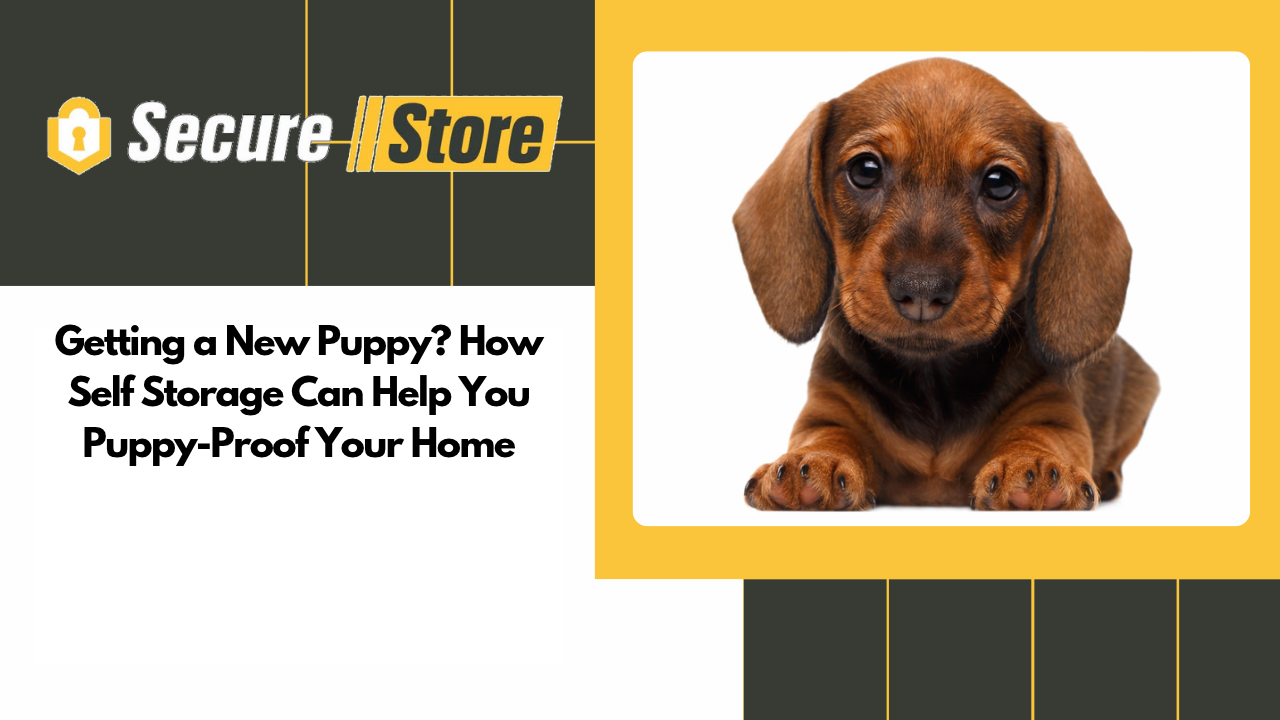
Bringing a new puppy home is an exciting experience.
From choosing a name and buying a comfortable bed to preparing for training and those first walks, there is plenty to organise before your new companion arrives.
But one part of puppy preparation that is often overlooked is the layout of your home.
Puppies are naturally curious. They explore unfamiliar environments, investigate objects and may chew things they shouldn’t.
Loose cables, low shelves, delicate ornaments and cluttered hallways can all create unnecessary risks.
Preparing your home in advance can make the transition easier for both you and your new pet.
Temporary self storage can help you move suitable furniture and household belongings out of busy areas while you create a safer, more practical environment for your puppy.
SecureStore provides flexible personal self storage across Bury, Manchester, Failsworth, Salford and the wider Greater Manchester area.
Why Puppy-Proofing Your Home Matters
A puppy doesn’t understand which belongings are valuable, fragile or dangerous.
A pair of shoes might look like a toy.
A trailing cable could attract attention.
A decorative object on a low table may be knocked over.
Puppy-proofing means identifying potential hazards and making appropriate changes before your dog arrives.
The goal isn’t to empty your home.
It’s to create a safe environment where your puppy can explore, rest and learn.
Start by Looking at Your Home From a Puppy’s Perspective
Walk through your home and consider what a small dog might be able to reach.
Look for:
- Loose electrical cables
- Small objects
- Unstable furniture
- Fragile decorations
- Accessible household chemicals
- Shoes and clothing
- Low-level storage
- Unsecured bins
- Dangerous plants
Some hazards may not be obvious when you’re standing up.
Getting down to a lower level can help you identify objects that might attract a curious puppy.
Create a Dedicated Puppy Area
Many new dog owners find it useful to establish a designated area where their puppy can rest and spend time under appropriate supervision.
Depending on your home, this could be part of:
- The kitchen
- A utility room
- The living room
- Another suitable indoor space
The area should provide appropriate comfort, ventilation, supervision and access to essentials.
Speak to your veterinary professional or a qualified dog behaviour specialist about suitable arrangements.
Clear Unnecessary Furniture
A room that works perfectly for adults may be crowded for a puppy.
You might have:
- Extra side tables
- Decorative stands
- Floor lamps
- Magazine racks
- Small cabinets
- Storage baskets
Some items may be unstable or easy to knock over.
If they’re not essential, consider moving them temporarily.
Suitable furniture can be placed into self storage while you adjust your home’s layout.
Protect Sentimental Belongings
Some household objects are difficult or impossible to replace.
For example:
- Family photographs
- Decorative ornaments
- Antique accessories
- Handmade items
- Keepsakes
- Collectables
If these are positioned within reach of a puppy, consider relocating them.
For suitable belongings, self storage may provide additional space without requiring you to sell or dispose of treasured possessions.
Keep Electrical Cables Out of Reach
Electrical cables can be dangerous if chewed.
Check areas around:
- Televisions
- Computer desks
- Floor lamps
- Phone chargers
- Entertainment systems
Use appropriate cable-management solutions and keep electrical equipment safely positioned.
Never rely on storage alone to address electrical hazards.
Seek professional advice where necessary.
Think Carefully About Low Shelves
Open shelving can look attractive, but the bottom shelves may be accessible to a puppy.
Books, decorations and small household objects could be knocked over or chewed.
Consider moving vulnerable belongings to higher, secure locations.
If you don’t have enough room, suitable non-essential items may be placed into temporary storage.
Make Hallways Easier to Navigate
Hallways often contain:
- Shoe racks
- Coat stands
- Umbrella holders
- Storage benches
- Decorative tables
A new puppy may spend time moving through these spaces.
Keeping walkways clear can reduce clutter and make supervision easier.
Avoid leaving shoes, bags or small objects on the floor.
Shoes Are a Common Target
Puppies may chew shoes because of their texture, smell or accessibility.
Rather than leaving footwear near the front door, create secure storage.
For example:
- A closed shoe cupboard
- A suitable high shelf
- A secure wardrobe
You don’t need a self-storage unit for everyday shoes, but moving surplus furniture may help create room for more practical household storage.
Check Your Living Room Layout
Living rooms often contain numerous items within a puppy’s reach.
These may include:
- Remote controls
- Cushions
- Throws
- Books
- Decorative accessories
- Children’s toys
- Electronic devices
Consider which items need to remain accessible and which should be moved.
Keeping the room organised can make it easier to supervise your puppy.
Protect Upholstered Furniture
Some puppies may scratch or chew furniture while exploring their environment.
Appropriate training, supervision and suitable chew toys are important.
For valuable or delicate furniture, you may wish to consider whether it should remain in a room regularly used by your puppy.
Temporary storage may be an option for suitable non-essential items.
Don’t Overcrowd the Puppy Area
A puppy needs appropriate room to move and rest.
Avoid filling the designated area with unnecessary furniture.
The amount and type of space required will depend on your puppy’s age, size and individual needs.
Seek advice from an appropriate animal-care professional.
Consider Your Dining Room
Dining rooms may contain furniture and decorative items that are not used every day.
For example:
- Occasional chairs
- Display cabinets
- Sideboards
- Decorative stands
- Spare tables
If you’re creating a puppy-friendly layout, consider whether some suitable items could be moved temporarily.
Secure Household Chemicals
Cleaning products, detergents, garden chemicals and other hazardous substances must be kept securely away from pets.
Do not place hazardous chemicals in ordinary self-storage units.
Use appropriate secure storage at home or other authorised facilities, following product safety instructions.
If your puppy may have ingested a harmful substance, contact a veterinary professional immediately.
Check Houseplants
Some plants can be toxic to dogs.
Before bringing your puppy home, review the plants in your property and garden.
The Dogs Trust provides guidance on dog ownership and welfare.
If you’re unsure whether a plant is safe, consult your veterinary professional.
Don’t assume that a plant is harmless simply because it’s commonly sold as a houseplant.
Keep Small Objects Off the Floor
Puppies may swallow small objects.
Potential hazards can include:
- Coins
- Buttons
- Small toys
- Batteries
- Jewellery
- Loose fittings
Keep these items securely out of reach.
Batteries are particularly dangerous if swallowed.
Seek urgent veterinary advice if ingestion is suspected.
Children’s Toys Need Special Attention
If you have children, their toys may be scattered around the house.
Some toys contain small parts that are unsuitable for puppies.
Consider introducing designated storage areas for children’s belongings.
For example:
CHILDREN’S TOYS
PUPPY TOYS
Keeping these categories separate can reduce confusion.
Create a Proper Puppy Supplies Area
Before your puppy arrives, organise essential supplies.
Depending on veterinary and welfare advice, these may include:
- Suitable food and water bowls
- Appropriate bedding
- A collar or harness
- Lead
- Suitable toys
- Grooming accessories
- Cleaning materials stored safely
Keep frequently needed items accessible.
Don’t place essential pet supplies into external storage where they may be difficult to retrieve.
Food Must Be Stored Appropriately
Pet food requires suitable storage according to manufacturer instructions.
Ordinary self-storage units are not appropriate for storing food or other perishable goods.
Keep pet food in suitable conditions at home or another appropriate facility.
Preparing Your Garden
Puppy-proofing isn’t limited to indoor spaces.
Before allowing your puppy into the garden, check:
- Boundary security
- Gates
- Potential escape routes
- Dangerous plants
- Sharp objects
- Garden chemicals
- Water features
- Unstable equipment
Supervise your puppy appropriately.
The RSPCA provides resources about animal welfare and responsible pet ownership.
Garden Equipment Can Create Hazards
Gardens often contain:
- Tools
- Plant pots
- Decorative ornaments
- Outdoor furniture
- Sports equipment
- Gardening accessories
Move potentially dangerous items into appropriate secure locations.
Suitable non-hazardous seasonal belongings may be considered for self storage.
Do not store fuels, hazardous chemicals or other prohibited materials.
Don’t Forget the Garage
Garages can contain equipment that may be dangerous to animals.
For example:
- Tools
- Vehicle products
- Electrical equipment
- Sharp objects
- Chemicals
Keep your puppy away from unsafe areas.
Self storage may help free up space for suitable non-hazardous household items, but dangerous substances still require appropriate authorised storage.
What About Puppy Gates?
Suitable pet gates may help manage access to particular areas of the home.
However, not every gate is appropriate for every staircase, doorway or animal.
Follow manufacturer instructions and seek appropriate professional advice.
A pet gate does not replace supervision.
Create a Calm Sleeping Area
Puppies need plenty of rest.
Choose a suitable area that is comfortable, secure and appropriate for your puppy.
Avoid placing bedding near hazards or where the puppy may be disturbed constantly.
A veterinary professional or qualified behaviour specialist can advise on suitable sleeping arrangements.
Consider Your Home Office
If you work from home, a puppy may be curious about:
- Computer cables
- Office chairs
- Paperwork
- Chargers
- Small accessories
Keep equipment secure.
Move unnecessary objects out of reach.
If your office is overcrowded, temporary storage for suitable belongings may help you reorganise the space.
Organise Your Belongings Before Moving Them
If you’re placing household items into storage, make an inventory first.
For example:
| Reference | Item | Original room |
|---|---|---|
| P01 | Decorative floor lamp | Living room |
| P02 | Small side table | Lounge |
| P03 | Display ornaments | Dining room |
| P04 | Spare bookshelf | Hallway |
This makes it easier to retrieve belongings later.
Protect Furniture Before Storage
Before moving suitable furniture:
- Clean it appropriately.
- Ensure it is fully dry.
- Remove loose accessories.
- Protect vulnerable surfaces.
- Follow manufacturer guidance.
- Label any dismantled components.
Avoid storing damp or contaminated belongings.
Keep Fragile Items Properly Packed
Glassware, ornaments and delicate accessories need suitable protection.
Use appropriate packaging materials.
Label boxes clearly.
Avoid placing heavy cartons on fragile belongings.
How Long Might You Need Storage?
Some homeowners may only want additional space during the first few months of puppy ownership.
Others may decide to keep certain items stored for longer.
The right arrangement depends on your home, the belongings involved and how your puppy develops.
Review the situation periodically.
Puppy-Proofing Changes as Your Dog Grows
A young puppy may initially be unable to reach certain objects.
As it grows, its reach and behaviour may change.
Review your home regularly.
Don’t assume an arrangement remains safe simply because it worked during the first few weeks.
Training Is Just as Important as Organisation
A clear home can help reduce hazards, but it doesn’t replace appropriate training and supervision.
Reward-based training can help puppies learn suitable behaviours.
The Kennel Club provides information about puppy care and training.
Seek professional support if you’re concerned about behaviour.
Avoid Buying Too Much Puppy Equipment
New pet owners sometimes purchase more equipment than they actually need.
Before buying additional accessories, consider:
- Whether the item is suitable for your puppy
- Whether you already own something appropriate
- Whether it is recommended by a professional
- Whether it will still be useful as your puppy grows
Good preparation doesn’t necessarily mean buying large quantities of products.
Declutter Before Your Puppy Arrives
Preparing for a puppy is an opportunity to review your home.
Create three categories:
Keep
Items you still use or value.
Store
Suitable belongings you want to retain but temporarily need out of the way.
Sell or donate
Items you no longer need.
This can help create a more practical living environment.
Donating Unwanted Household Items
Suitable household items may be accepted by charitable organisations.
The British Heart Foundation provides information about donating suitable furniture and household goods.
Check acceptance requirements before arranging collection.
Don’t Store Everything Indefinitely
Temporary storage should serve a clear purpose.
Review your belongings periodically.
Ask whether you still need each item.
If your home has changed permanently, you may decide that certain furniture no longer fits your lifestyle.
Removal + Storage
Moving larger furniture can be physically demanding.
SecureStore also provides Removal + Storage solutions.
Speak to our team about suitable household belongings and whether we can assist.
Storage Insurance
Furniture and household belongings can represent a significant combined value.
Suitable items placed into storage require appropriate insurance.
SecureStore can provide storage insurance at a competitive price.
Check the declared value and relevant policy terms.
Frequently Asked Questions
Can self storage help when preparing for a new puppy?
Yes. Self storage may provide temporary space for suitable furniture and household belongings while you reorganise your home.
What should I remove before bringing a puppy home?
Focus on hazards such as loose cables, small objects, unstable furniture, accessible chemicals and potentially toxic plants. Seek veterinary advice about specific risks.
Can I store furniture that I don’t want my puppy to damage?
Suitable furniture may be placed into self storage, provided it is properly prepared and complies with SecureStore’s storage rules.
Can I store pet food in a self-storage unit?
No. Ordinary self storage is not suitable for food or other perishable goods.
Can SecureStore help move larger furniture?
Yes. SecureStore provides Removal + Storage solutions. Contact the team to discuss suitable items and your requirements.
Your New Puppy Home Preparation Checklist
- Review each room for potential hazards.
- Secure electrical cables.
- Remove small objects from accessible areas.
- Check furniture stability.
- Keep chemicals safely secured.
- Identify potentially toxic plants.
- Organise children’s toys.
- Create a suitable puppy area.
- Prepare appropriate bedding and supplies.
- Check garden boundaries.
- Secure tools and dangerous equipment.
- Decide which furniture should be moved.
- Pack suitable belongings carefully.
- Confirm every item is permitted for storage.
- Arrange appropriate insurance.
- Review your home as your puppy grows.
Give Your Puppy a Safe and Welcoming Start
Bringing a puppy into your home is an exciting new chapter.
But preparing the property in advance can help reduce unnecessary stress.
A home filled with low-level decorations, loose belongings and overcrowded furniture may need some adjustments before a curious puppy arrives.
Start by identifying hazards.
Keep essential belongings accessible.
Create appropriate spaces for rest and play.
And consider whether certain furniture or household items could be moved temporarily.
Suitable self storage can provide additional space while you reorganise your home, allowing you to retain belongings without keeping everything in your puppy’s immediate environment.
SecureStore provides flexible personal self storage across Bury, Manchester, Failsworth, Salford and the wider Greater Manchester area.
How to Book Your Unit
If you’re preparing your home for a new puppy and need additional space for suitable furniture or household belongings, contact SecureStore to discuss your storage requirements.
Telephone: 0161 470 0288
Email: info@securestoreselfstorage.co.uk
Visit: 574 Manchester Road, Bury, BL9 9SW
SecureStore provides flexible personal and business self storage, Removal + Storage and storage insurance across Greater Manchester.